Choosing between online billing software vs free billing tools is a common challenge for small businesses. At first, free tools look attractive because they promise basic invoicing at no cost. However, many businesses face problems once daily operations increase.
Online billing software offers a more stable and structured approach. Therefore, understanding the difference between these options helps businesses make better long-term decisions.
This guide explains the real differences that affect small businesses in India.
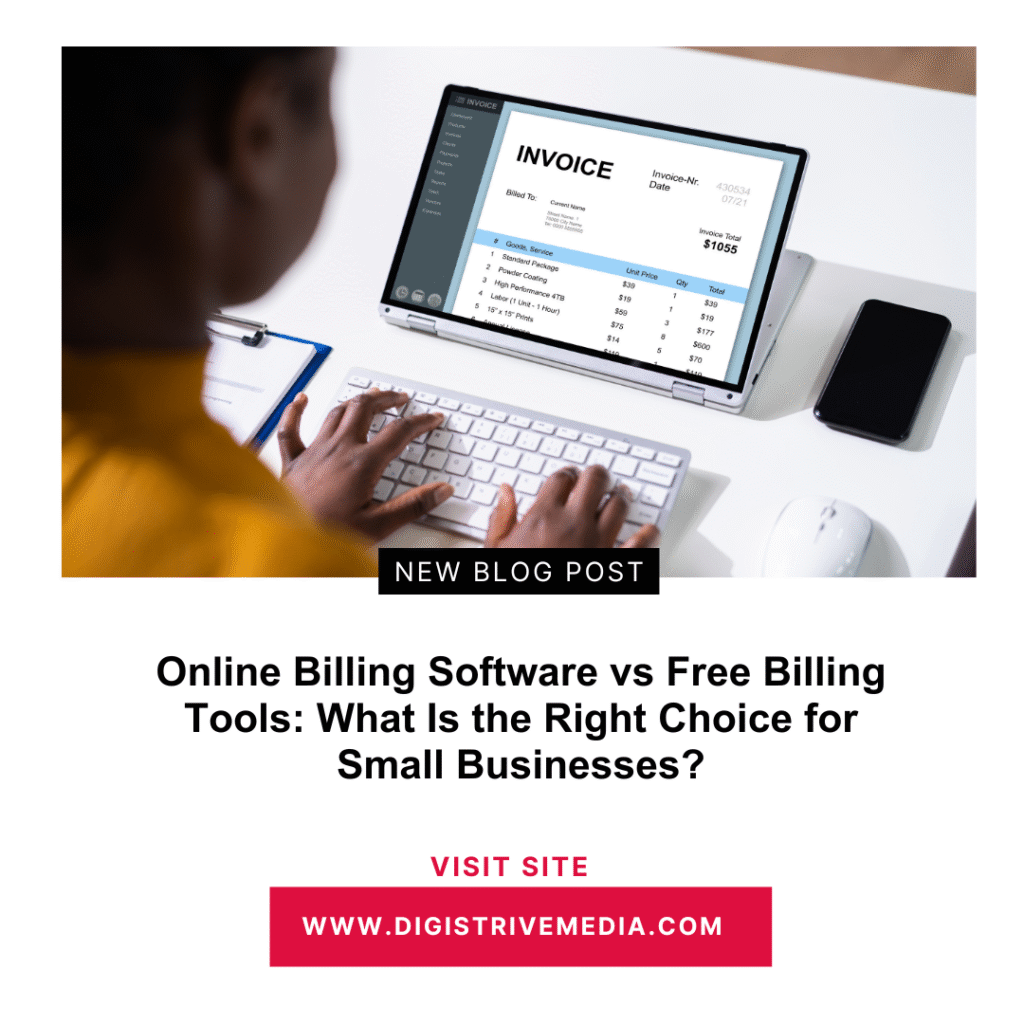
What Are Free Billing Tools?
Free billing tools are basic platforms that allow users to create invoices without payment. For example, freelancers and early-stage businesses often start with these tools.
These tools usually offer:
- Basic invoice creation
- Limited customer records
- Very few reporting features
However, free billing tools are not designed for growth. As a result, limitations appear quickly when usage increases.
What Is Online Billing Software?
Online billing software is a cloud-based system built for long-term business use. In contrast to free tools, it focuses on stability, data security, and scalability.
Solutions like DigiBilling help businesses:
- Generate professional invoices
- Manage customer and payment data
- Track outstanding balances
- Maintain centralized billing records
Online Billing Software vs Free Billing Tools: Key Differences
1. Reliability and Performance
Free billing tools often slow down when invoice volume increases. As a result, errors and downtime become common.
In contrast, online billing software runs on optimized servers. Therefore, performance remains consistent even as the business grows.
2. Data Security and Control
Many free tools store data on external servers with limited protection. Consequently, businesses have less control over their data.
Most importantly, online billing software prioritizes data security. It stores invoices and customer records in controlled environments, which reduces risk.
3. Scalability for Growth
Free billing tools work only at a very small scale. However, they struggle when businesses add more customers or invoices.
Online billing software is built to scale. As a result, businesses do not need to change systems frequently.
4. Customer and Payment Management
Free tools usually lack proper customer management features. Therefore, businesses track payments manually.
In contrast, online billing software centralizes customer details, invoices, and payment history. This makes follow-ups easier and more accurate.
5. Support and Accountability
Free tools rarely provide reliable support. When issues occur, businesses often wait without resolution.
On the other hand, online billing software includes structured support and maintenance. As a result, problems get resolved faster.
Why Free Billing Tools Fail as Businesses Grow
Free billing tools may seem sufficient at first. However, they introduce serious risks over time.
Common issues include:
- Data storage limits
- Poor system performance
- No guaranteed backups
- Sudden service shutdowns
According to the Ministry of MSME, businesses should adopt digital tools that support long-term stability and growth.
Compliance and Digital Record Keeping in India
Maintaining accurate billing records is critical for compliance. According to the GST portal, businesses must keep proper invoice records for audits and tax filing.
Free tools often fail to organize records properly. Therefore, online billing software becomes a safer option for compliance.
Why DigiBilling Is Better Than Free Billing Tools
DigiBilling is designed for businesses that want reliability without complexity. It avoids the risks associated with free tools.
With DigiBilling, businesses get:
- Stable performance
- Secure data storage
- Organized customer records
- Scalability for future growth
The platform is promoted and supported by Digistrive Media, which ensures continuous improvement and long-term support.
Cost vs Value: A Practical Comparison
Free billing tools appear cost-effective initially. However, downtime, data loss, and migration issues often increase hidden costs.
Online billing software requires a modest investment. Therefore, businesses gain reliability, security, and efficiency in return.
In the long run, value matters more than price.
Who Should Avoid Free Billing Tools?
Free billing tools are not suitable for:
- GST-registered businesses
- Companies with recurring customers
- Businesses planning to scale
- Businesses that value data security
For these businesses, online billing software is the safer choice.
Final Verdict: Online Billing Software vs Free Billing Tools
Free billing tools may work temporarily. However, they are not built for business growth.
Online billing software provides structure, control, and scalability. As a result, it supports better cash flow tracking and compliance.
For small businesses planning long-term success, online billing software is the smarter decision.
Final Thoughts
The choice between online billing software vs free billing tools directly impacts efficiency and data safety.
DigiBilling offers a reliable alternative backed by Digistrive Media. It helps businesses move away from risky free tools with confidence.
If your business is ready to grow without limitations, online billing software is the right step forward.