Introduction
In 2026, startups are launching faster than ever—but most fail for one simple reason: lack of a strong digital foundation. Social media pages, marketplaces, and messaging apps are useful, but none of them replace a website for startup business in 2026.
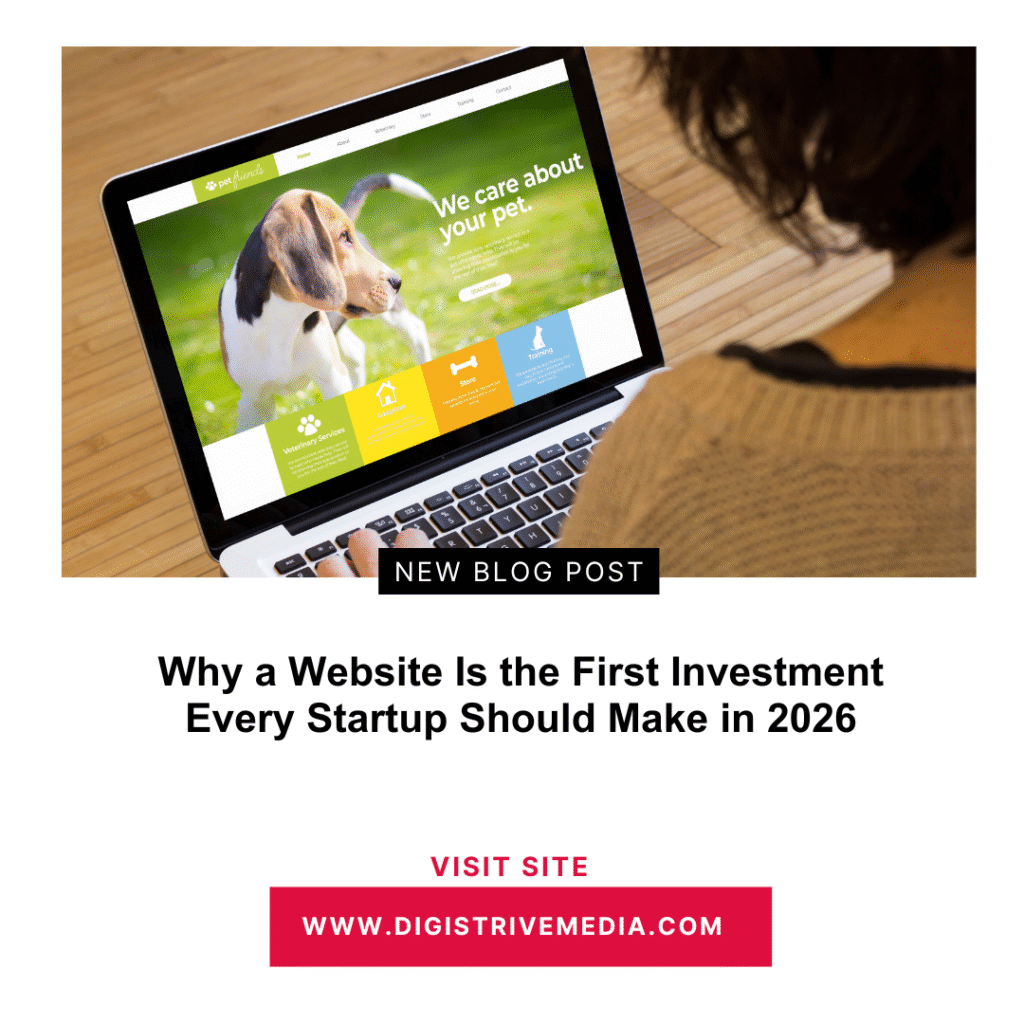
A website is no longer just an online brochure. It is your brand’s headquarters, sales engine, trust builder, and data source. For startups with limited budgets and high expectations, a website is the first investment that multiplies every other marketing effort.
This blog explains why a website should be the very first investment every startup makes in 2026.
A Website Is Your Startup’s Digital Foundation
Every serious business in 2026 starts with a website.
Why? Because all digital activities depend on it:
- Paid ads need landing pages
- SEO requires owned web pages
- Content marketing needs a publishing platform
- AI tools and automation need a central system
Without a website, startups build growth on rented platforms. With a website, they build long-term digital assets.
Startups Need Trust Before They Need Traffic
In 2026, customers do not trust businesses that exist only on social media.
A Website Instantly Builds Credibility
- Shows professionalism
- Displays services, pricing, and positioning
- Hosts testimonials and case studies
- Provides official contact information
When potential customers search your brand name, the first thing they expect is a website. If it does not exist, trust drops immediately.
A Website Converts Visitors into Leads
Social media creates attention. A website converts that attention into business.
How a Website Generates Leads
- Contact forms
- Lead magnets
- Chatbots
- Appointment booking
- Email capture
A startup website works 24/7, capturing opportunities even when your team is offline.
Internal Link: Explore how we build conversion-focused websites →
https://digistrivemedia.com/services.html
Social Media Alone Is Not a Business Asset
Many startups in 2026 rely only on Instagram, WhatsApp, or marketplaces. This is risky.
The Problems with Social-Only Growth
- Algorithm dependency
- Account suspension risk
- No control over user data
- Limited scalability
A website gives startups full ownership of their audience, data, and growth.
Websites Multiply the ROI of Marketing Spend
Every rupee spent on marketing performs better when it leads to a website.
Website + Marketing = Growth Engine
- Ads convert better with landing pages
- SEO traffic compounds over time
- Content builds authority
- Analytics provide insights
Without a website, marketing expenses become short-term costs instead of long-term investments.
A Website Makes Your Startup Searchable
If your startup is not on Google, it does not exist for many customers.
Why Search Visibility Matters
- Customers search before they buy
- Investors research before they talk
- Partners evaluate credibility online
A website allows startups to rank on search engines, capture intent-driven traffic, and grow organically.
Internal Link: Read more digital marketing insights →
https://digistrivemedia.com/blog/
Websites Enable AI, Automation, and Scalability
In 2026, modern startups use:
- AI chatbots
- Automated lead follow-ups
- Smart analytics
- Personalized content
All of this requires a website as the base system.
A website is not just a design asset—it is a technology platform that supports future growth.
Cost vs Value: Why a Website Is a Smart First Investment
Many founders delay building a website to save money. This is a mistake.
The Real Cost of Not Having a Website
- Lost leads
- Lower trust
- Poor conversions
- Wasted ad spend
A website pays for itself faster than almost any other startup expense when built correctly.
What a Startup Website Must Have in 2026
A basic startup website in 2026 should include:
- Mobile-first design
- Fast loading speed
- Clear value proposition
- Conversion-focused layout
- SEO-ready structure
- Analytics and tracking
This is the minimum standard—not an upgrade.
Why Startups That Delay Websites Fall Behind
Startups that postpone building a website often:
- Depend too much on referrals
- Struggle to scale
- Look unprofessional to investors
- Miss early growth opportunities
In competitive markets, delay equals disadvantage.
How Startups Should Approach Website Investment
The right approach is simple:
- Start with a professional website
- Optimize for conversions
- Add SEO and analytics
- Integrate AI and automation
- Scale marketing around it
Your website should grow with your business.
Internal Link: See our complete website solutions →
https://digistrivemedia.com/services.html
Conclusion
In 2026, a website is not optional—it is foundational.
A website for startup business in 2026:
- Builds trust
- Generates leads
- Supports marketing
- Enables AI and automation
- Scales with growth
For startups, the website is not an expense. It is the first and smartest investment.
Call to Action
Planning to launch or scale your startup in 2026?
Digistrive Media helps startups build high-converting, future-ready websites designed for growth.
👉 Book a free consultation:
https://digistrivemedia.com/contact.html