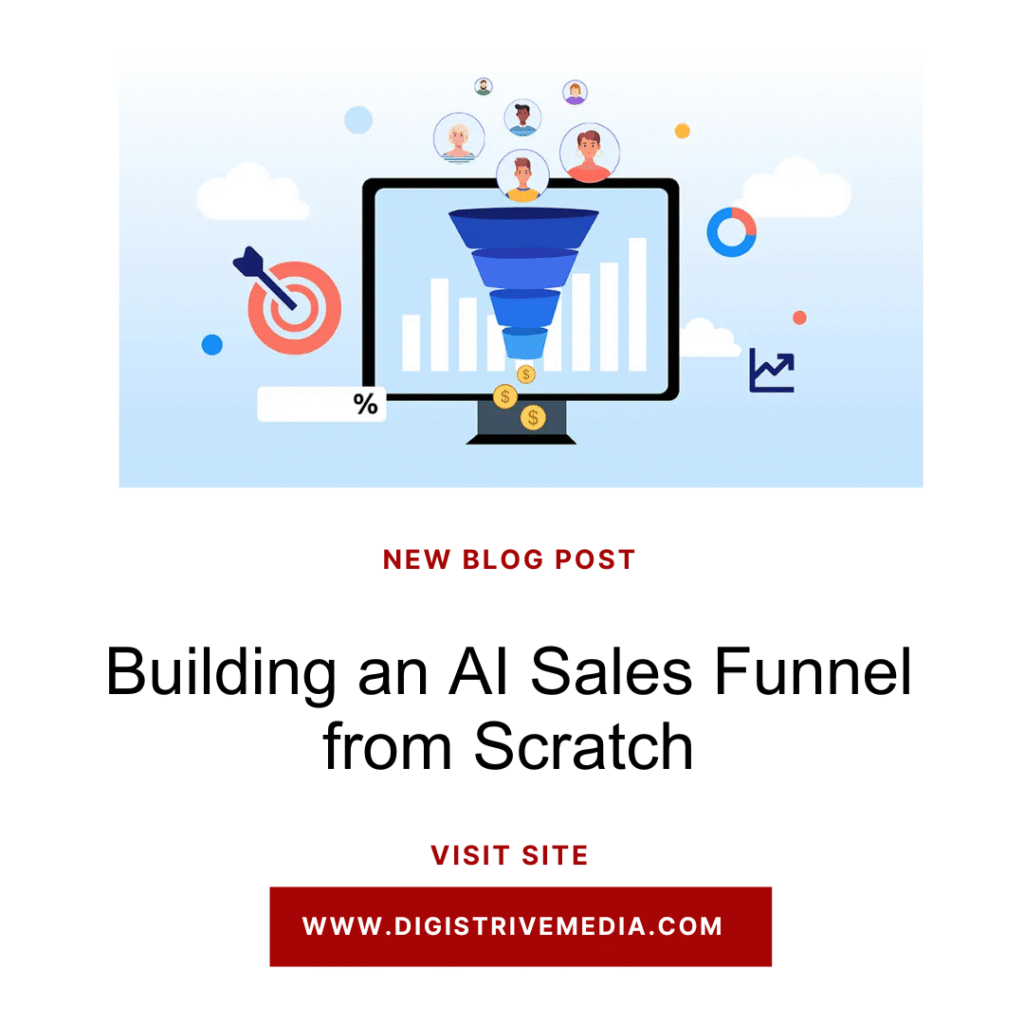
Building an AI Sales Funnel from Scratch: A Step-by-Step Guide for the Modern Business
In today’s hyper-competitive marketplace, the difference between success and stagnation often comes down to how efficiently a business can attract, nurture, and convert leads. Traditional sales funnels, though effective in their time, are no longer enough. Customers now expect personalized experiences, instant communication, and smarter engagement. That’s where AI-powered sales funnels come in — transforming the traditional customer journey into an intelligent, automated, and data-driven system.
If you’re wondering how to build an AI sales funnel from scratch, this guide walks you through the key stages, tools, and best practices to create one that delivers measurable results.
What Is an AI Sales Funnel?
An AI sales funnel integrates artificial intelligence technologies — such as machine learning, predictive analytics, chatbots, and automation — into each stage of the buyer’s journey. Rather than manually moving leads through awareness, consideration, and conversion, AI helps automate, personalize, and optimize the entire process.
This means your funnel can:
- Identify the most promising leads automatically
- Deliver personalized content at every stage
- Predict when a lead is ready to buy
- Provide real-time insights to improve strategy
In short, AI helps businesses sell smarter, not harder.
Step 1: Define Your Funnel Stages and Goals
Before integrating AI, clearly outline your funnel stages — typically Awareness, Consideration, Conversion, and Retention. Define what each stage means for your business:
- Awareness: How will potential customers discover your brand?
- Consideration: What type of content or interactions will nurture interest?
- Conversion: How will you turn prospects into paying customers?
- Retention: How will you keep customers engaged and loyal?
Once your structure is set, define measurable goals — such as website visits, lead form completions, demo requests, or repeat purchases. AI tools will later help track and optimize these KPIs automatically.
Step 2: Use AI for Lead Generation and Qualification
Your funnel starts with attracting leads — and AI can supercharge this stage.
- AI-Driven Ad Targeting: Tools like Google Ads Smart Bidding or Meta Advantage+ use AI to identify the right audiences and optimize campaigns in real time.
- Predictive Lead Scoring: Platforms like HubSpot, Salesforce Einstein, or LeadSquared use machine learning to score leads based on behavior, demographics, and past interactions.
- Content Optimization: AI tools analyze which blog topics, keywords, or formats attract the highest-quality leads.
The goal here is efficiency — let AI filter out unqualified leads so your sales team can focus on the ones that truly matter.
Step 3: Personalize Engagement with AI Chatbots
Once visitors arrive at your website or social channels, AI chatbots act as intelligent sales assistants. They greet users, answer questions, and guide them toward relevant information or offers — all in real time.
Modern chatbots (like those powered by GPT-based models) can:
- Engage in human-like conversations
- Capture lead information automatically
- Recommend products or services based on user behavior
- Schedule calls or demos directly into your CRM
For example, if a visitor is browsing your pricing page, the chatbot could ask, “Would you like to see how this plan fits your business?” — effectively moving the lead one step closer to conversion.
Step 4: Automate Nurturing with AI-Powered Email and Content Tools
Not every lead is ready to buy right away — that’s where AI-driven nurturing comes in.
Use tools like ActiveCampaign, Mailchimp AI, or HubSpot’s Smart Content to:
- Send personalized emails based on lead behavior (e.g., visited product pages, downloaded an ebook)
- Adjust email timing and frequency automatically for better open rates
- Dynamically change website content for returning visitors
AI can even predict the best times to reach out or the type of content that will push a lead further down the funnel — whether it’s a case study, webinar invite, or limited-time offer.
Step 5: Predict and Optimize Conversions
At the conversion stage, predictive analytics become crucial. AI tools analyze user behavior and historical data to identify the best moments to close deals.
For example:
- AI CRM systems can alert your sales team when a lead shows strong purchase intent.
- Recommendation engines suggest complementary products or upgrades at checkout.
- Dynamic pricing tools adjust offers based on customer profiles, demand, and competitor pricing.
AI doesn’t just help convert leads — it ensures conversions happen at the right time and with the right message.
Step 6: Retain Customers Using AI Insights
An AI sales funnel doesn’t end at conversion — it continues through retention and loyalty. AI analyzes customer data to predict churn, recommend re-engagement campaigns, and even personalize post-sale communication.
For example:
- AI-driven customer success tools can flag at-risk customers for proactive outreach.
- Sentiment analysis tools can assess feedback and identify issues early.
- Personalized upsell recommendations can increase customer lifetime value (CLV).
Retention-focused AI ensures your funnel remains a cycle of growth rather than a one-time process.
Step 7: Continuously Analyze and Improve
Finally, the most powerful aspect of an AI-driven sales funnel is its ability to learn and evolve. AI tools collect data at every step — from click-through rates to sales conversions — and use it to recommend optimizations.
Dashboards powered by AI analytics provide insights like:
- Which marketing channels bring the highest ROI
- Which customer segments convert best
- Where potential customers drop off in the funnel
These insights help businesses refine strategies, reduce costs, and maximize performance over time.
Conclusion: The Future of Sales Is Intelligent
Building an AI sales funnel from scratch may seem complex, but the long-term rewards are worth the effort. AI brings automation, personalization, and predictive power into every part of the customer journey — from the first website visit to long-term loyalty.
By combining smart data with human creativity, businesses can create funnels that are not only efficient but also deeply customer-centric. The future of sales isn’t about more leads — it’s about smarter, data-driven relationships that turn interest into loyalty and conversations into conversions.