Introduction: The Science of Why You Can’t Stop Scrolling
Ever wondered why you keep refreshing Instagram or clicking on one more YouTube thumbnail — even when you know you should stop?
It’s not by accident.
It’s by design.
Every scroll, every notification, and every “limited offer” is powered by one thing — dopamine.
Dopamine is your brain’s “feel-good” chemical — released whenever you experience pleasure, anticipation, or reward.
And in digital marketing, dopamine is the invisible engine that drives attention, addiction, and action.
Let’s explore how marketers and platforms use neuroscience to keep you engaged — and how understanding the dopamine loop can help brands build attention ethically.
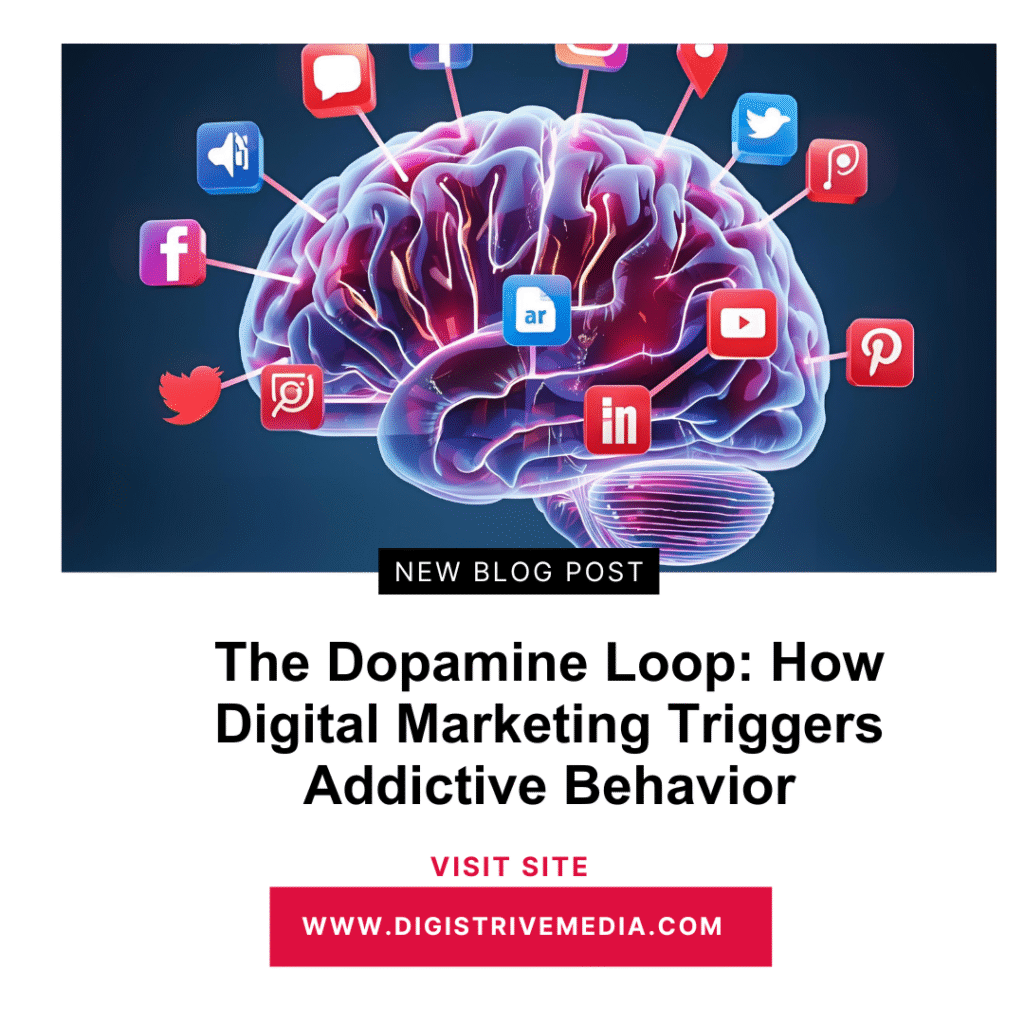
⚙️ 1. The Dopamine Loop: How Digital Marketing Hooks the Brain
Every time you:
- Get a like on your post
- Receive a sale notification
- Open a “You’ve Got Mail!” alert
…your brain gets a tiny dopamine hit.
This is known as The Dopamine Loop — a cycle of anticipation → reward → craving → repetition.
| Stage | What Happens | Marketing Example |
|---|---|---|
| Anticipation | You expect a reward | Waiting for likes or comments |
| Reward | You receive the hit | Getting a sale or share |
| Craving | The brain wants more | You check again — “any new updates?” |
| Repetition | Behavior repeats | You scroll endlessly |
Digital marketing is designed to keep this loop active — rewarding users unpredictably so they keep coming back for the next hit.
That’s why social media feels addictive — it’s not your willpower failing; it’s neuroscience succeeding.
💥 2. The Psychology of Dopamine: Why It’s So Addictive
Dopamine isn’t about pleasure itself — it’s about anticipation of pleasure.
Your brain lights up not when you get the reward, but when you expect it.
Marketers use this principle through:
- Variable rewards — You don’t know when the next “like” or deal will appear.
- Micro feedback loops — Notifications, vibrations, or sounds that trigger anticipation.
- Emotional highs — Flash sales, contests, and surprise offers tap into the reward system.
It’s the same neurological loop that powers casinos and gaming — except now it lives in your pocket.
🎯 3. The Marketing Tools That Trigger Dopamine
Here’s how dopamine-driven design keeps customers hooked — across every digital platform:
| Marketing Element | How It Triggers Dopamine | Example |
|---|---|---|
| Push Notifications | Anticipation of something new | “Your friend just tagged you!” |
| Likes & Comments | Instant validation & social reward | “100 likes in 10 minutes” |
| Limited-Time Offers | Scarcity + time pressure | “Offer ends in 3 hours!” |
| Gamification | Rewards for engagement | “Earn badges or points for every share” |
| Email Alerts | Anticipation of deals | “You’ve unlocked a special discount!” |
| Infinite Scrolling | Endless potential reward | Social media feeds and TikTok loops |
These tactics stimulate micro doses of dopamine, training users to expect and seek constant engagement.
🧩 4. How Brands Engineer the Dopamine Effect (Ethically)
Not all dopamine marketing is manipulative — when used ethically, it enhances user experience and connection.
Here’s how ethical marketers use dopamine psychology:
✅ Reward Positive Behavior: Encourage learning, wellness, or progress.
✅ Build Anticipation, Not Anxiety: Use curiosity-driven headlines, not fear tactics.
✅ Celebrate Milestones: Send “You’ve hit your goal!” notifications instead of constant promotions.
✅ Personalize Rewards: Tailor offers to user behavior for real satisfaction, not random addiction.
💡 Example:
Duolingo’s streak notifications use dopamine loops for positive reinforcement — keeping users learning, not just scrolling.
⏳ 5. The Role of Dopamine in Ads and Conversions
Advertising thrives on emotion, and dopamine fuels curiosity and reward expectation.
Marketers leverage dopamine by:
- Creating anticipation (pre-launch teasers).
- Using surprise rewards (mystery boxes, giveaways).
- Showing progress indicators (completion bars).
- Delivering personal wins (personalized results pages).
When done well, dopamine-driven design doesn’t just grab attention — it builds brand loyalty through emotional satisfaction.
📱 6. Dopamine and Social Media Addiction
Social platforms are the dopamine laboratories of the modern world.
| Platform Element | What It Does to the Brain |
|---|---|
| ❤️ Likes & Reactions | Instant reward hit |
| 🔔 Notifications | Trigger anticipation |
| 📱 Infinite Scroll | Endless reward possibilities |
| 🎥 Short-Form Video | High-frequency dopamine bursts |
Every swipe keeps users guessing when the next high will come — that’s the variable reward system, the same mechanism behind slot machines.
Marketers tap into this by creating snackable, emotional content that delivers fast rewards — keeping audiences engaged longer.
💬 7. The Ethics of Dopamine Marketing
While dopamine marketing is powerful, it’s a double-edged sword.
Used irresponsibly, it can create digital addiction, anxiety, and fatigue.
Ethical marketers follow these rules:
- ⚖️ Balance Emotion and Logic: Inspire, don’t manipulate.
- 💬 Be Transparent: Avoid deceptive urgency.
- ❤️ Add Value: Let dopamine reinforce learning, not compulsive scrolling.
- 🕒 Respect Attention: Focus on long-term connection, not endless engagement.
The goal isn’t to hijack the brain — it’s to understand it and design experiences that delight, not drain.
💡 8. How to Use Dopamine in Your Marketing Strategy (Responsibly)
Here’s how to apply dopamine in digital marketing to boost engagement without crossing ethical lines:
✅ Use gamified rewards — loyalty points, badges, or streaks for engagement.
✅ Create positive anticipation — pre-launch teasers, countdowns, or sneak peeks.
✅ Offer instant feedback — thank-you messages, progress bars, success confirmations.
✅ Trigger micro-satisfaction — rewarding users for small actions (likes, comments, shares).
🔍 The key: make dopamine work for your audience — not against them.
📊 9. Measuring the Dopamine Effect in Marketing
To see if your campaigns tap dopamine correctly, track these behavioral KPIs:
- Engagement Rate: Dopamine drives attention.
- Click-Through Rate (CTR): Curiosity turns into clicks.
- Session Duration: Indicates how long your dopamine loops hold users.
- Repeat Visits: Show emotional loyalty.
- Conversion Rate: Reflects action-taking after emotional engagement.
If users feel energized (not drained), you’ve found the perfect ethical dopamine balance.
✅ Conclusion: The Future of Dopamine Marketing
Every scroll, like, and click is powered by neuroscience and psychology.
Digital marketing doesn’t just sell products — it sells emotional experiences powered by dopamine.
The challenge for modern brands?
Use this science to connect, not control.
When dopamine design fuels genuine satisfaction — not manipulation — marketing becomes what it should be:
A positive, rewarding relationship between brand and brain. 🧠
🔗 Internal Cluster Links
- Emotional Marketing — The Secret Psychology of Making Customers Feel Before They Buy
- The FOMO Effect — How Scarcity and Urgency Boost Conversions in Digital Marketing
- The Psychology of Trust in Digital Branding — How to Build Loyal Customers Online
- Color Psychology in Marketing — What Each Shade Says to the Brain
🔬 External Source:
Learn more about dopamine-driven marketing from Harvard Business Review — The Science of Dopamine and Decision-Making.