Introduction: Trust — The Currency of the Digital World
In today’s digital economy, trust isn’t optional — it’s everything.
People don’t buy products; they buy confidence in a brand.
When visitors land on your website, their brains subconsciously ask one question:
“Can I trust this?”
Before a click, scroll, or purchase, trust decides everything.
The psychology of trust in digital branding explains why some brands turn visitors into loyal customers — while others lose them in seconds.
💬 1. The Science Behind Digital Trust
Trust forms when the human brain senses safety, credibility, and consistency.
In digital marketing, these feelings come from subtle design cues, tone, and social validation.
📊 Research shows:
- 88% of users won’t return after a poor website experience.
- 70% of users judge credibility based on design alone.
- Trust increases purchase intent by 3x on e-commerce sites.
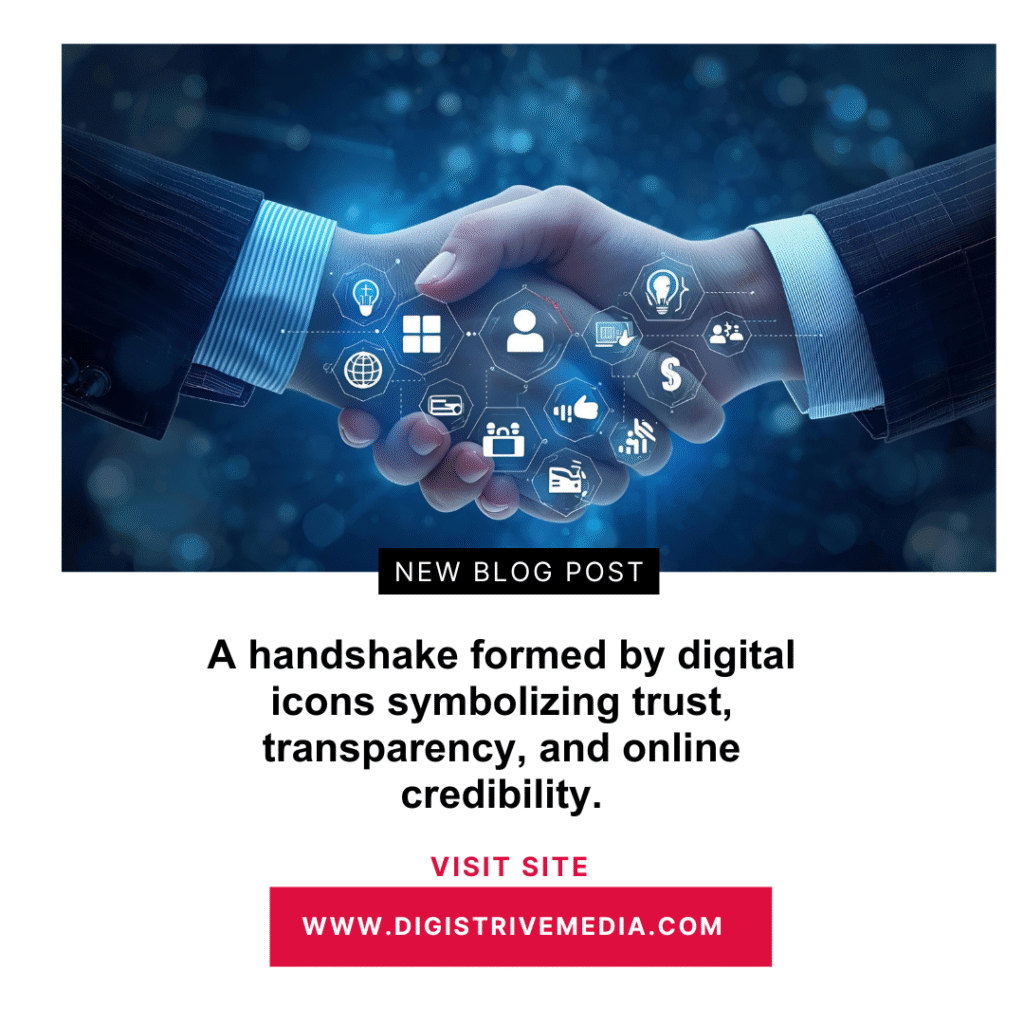
Your website is your digital handshake — and trust determines whether that handshake becomes a relationship.
🧩 2. The Three Pillars of Online Trust
1️⃣ Transparency
Be open about who you are and what you offer.
Show your team, mission, and story — not just your products.
- Display clear contact information.
- Avoid hidden fees or vague policies.
- Be upfront about pricing and terms.
💡 Formula: Transparency = Honesty = Trust.
2️⃣ Consistency
Trust grows from repetition and reliability.
Maintain a consistent tone, style, and color palette across your website, emails, and social media.
- Regularly update your blog and channels.
- Deliver on promises.
- Use familiar design elements across all touchpoints.
Brands that behave predictably are brands people feel safe with.
3️⃣ Social Proof
Humans trust what others already believe in.
Social validation is one of the strongest trust signals in digital branding.
- Share customer testimonials and real reviews.
- Add case studies and statistics (e.g., “Trusted by 10,000+ businesses”).
- Display trust badges (SSL, Verified, Partner logos).
When others trust you, your audience’s brain gets the message: “I’m safe here.”
🔍 3. The Role of Website Design in Building Trust
Before a single word is read, design communicates credibility.
In digital branding, aesthetics = trustworthiness.
✅ Trust-Building Design Practices:
- Clean, clutter-free layouts
- Fast loading speed
- Secure HTTPS connection
- Consistent brand colors
- Readable fonts and simple navigation
- Authentic, real imagery (not stock photos)
- Clear CTAs like “Book a Call” or “Start Free Trial”
💡 A trustworthy website feels human — not corporate.
📱 4. Emotional Triggers That Build Digital Trust
The psychology of trust is emotional before logical.
Here are the emotions that make people believe:
| Emotion | Trigger | Example |
|---|---|---|
| Safety | Security badges, privacy notices | “SSL Secured”, “No hidden fees” |
| Empathy | Customer-first tone | “We understand your challenges” |
| Authority | Certifications or expert features | “Google Partner”, “As seen in Forbes” |
| Belonging | Community-based marketing | “Join 10,000 happy subscribers” |
When users feel safe and understood, their brain lowers its guard — opening the door to loyalty.
🧩 5. Storytelling: The Shortcut to Trust
Facts inform. Stories connect.
People don’t trust faceless companies; they trust human stories.
Tell your brand story with authenticity and vulnerability:
✅ Why your brand exists
✅ What problem you solve
✅ Who you help
✅ How your journey started
💬 Example:
“We started in a small apartment with one laptop and a mission to help small businesses grow online.”
Simple. Real. Relatable.
That’s how you humanize your brand and earn emotional credibility.
🧱 6. How to Build Trust Across Digital Channels
Every platform your audience touches contributes to their perception of trust.
| Channel | Trust-Building Action |
|---|---|
| Website | Transparent about page, testimonials, secure checkout |
| Social Media | Show real faces, behind-the-scenes moments |
| Email Marketing | Use a personal tone and consistent cadence |
| Paid Ads | Keep promises; avoid clickbait |
| Customer Support | Respond quickly and empathetically |
Consistency across all these channels compounds digital trust — and turns one-time visitors into brand believers.
🧬 7. The Trust Funnel: Awareness → Connection → Loyalty
The trust funnel is how relationships evolve online.
1️⃣ Awareness Stage:
Provide helpful, authentic content (blogs, reels, guides).
2️⃣ Connection Stage:
Create emotional engagement through relatable stories and honest interactions.
3️⃣ Loyalty Stage:
Deliver consistently. Overdeliver when possible.
💡 Every stage strengthens emotional confidence — turning awareness into advocacy.
⚠️ 8. Common Trust Killers to Avoid
Even small missteps can destroy credibility. Avoid these trust killers:
🚫 Inconsistent brand voice
🚫 Generic stock images
🚫 Hidden pricing or unclear refunds
🚫 Fake reviews or unverifiable claims
🚫 Slow load speeds or broken links
Once broken, trust costs 10x more to rebuild than to maintain.
🧠 9. Case Studies — How Top Brands Built Unshakable Trust
| Brand | Trust Strategy | Why It Works |
|---|---|---|
| Apple | Consistency + simplicity + flawless design | Predictable quality = emotional safety |
| Zappos | Radical customer service & transparent policies | Customer-first culture = loyalty |
| Shopify | Expert blogs, education, and community | Authority + empathy build reliability |
| TATA Group (India) | Generational ethics and openness | Legacy trust through transparency |
Each of these brands proves that trust compounds over time — and becomes the ultimate competitive advantage.
✅ Conclusion: Trust Is the Invisible ROI
Trust doesn’t show up in Google Analytics — but it powers every click, purchase, and referral.
When users trust your brand, they don’t just buy from you — they believe in you.
So instead of asking, “How do I get more traffic?”, ask:
“How can I make people trust me enough to stay?”
Because in the digital world, trust is the new currency.
🧱 Internal Links (Cluster Connections)
- The Psychology of Digital Marketing: Why People Click, Buy, and Share
- The FOMO Effect: How Scarcity & Urgency Drive Conversions
- Emotional Marketing: How to Make Customers Feel Before They Buy
- Color Psychology in Marketing: What Each Shade Says to the Brain
📚 Quick Learning Recap
By understanding the psychology of trust in digital branding, you’ve learned:
- How trust functions in the human brain
- The 3 pillars of online credibility (transparency, consistency, social proof)
- Emotional and design-based triggers that build confidence
- Real-world examples of brands that mastered digital trust
👉 Mastering this makes you not just a marketer — but a relationship builder in the digital space.
❓ Frequently Asked Questions (FAQs)
1. What is the psychology of trust in digital branding?
It’s the study of how human emotions and perceptions influence brand credibility and loyalty online.
2. Why is trust important for digital marketing?
Because without trust, users won’t engage, share, or purchase — no matter how good your product is.
3. How can brands build trust online?
By being transparent, consistent, and authentic while using social proof and strong design cues.
4. What are the biggest trust killers in digital branding?
Fake reviews, inconsistent branding, unclear pricing, and poor user experience.
5. How can design improve trust?
Clean layouts, secure HTTPS, real imagery, and clear CTAs increase perceived reliability and professionalism.
6. Which brands have mastered digital trust?
Apple, Shopify, Zappos, and Tata Group — all use transparency, design, and consistency as trust anchors.
External Source:
For more insights on digital brand credibility, visit Harvard Business Review — The Neuroscience of Trust