💡 Introduction: Why Emotions Drive the Digital World
Have you ever bought something just because it felt right?
That’s emotional marketing at work.
From a luxury brand’s elegant ad to a charity’s heartfelt video, the world’s most successful campaigns don’t just sell products — they sell emotions.
Research shows that 95% of purchase decisions happen subconsciously, driven more by emotions than logic.
People may forget your words, but they’ll never forget how your brand made them feel.
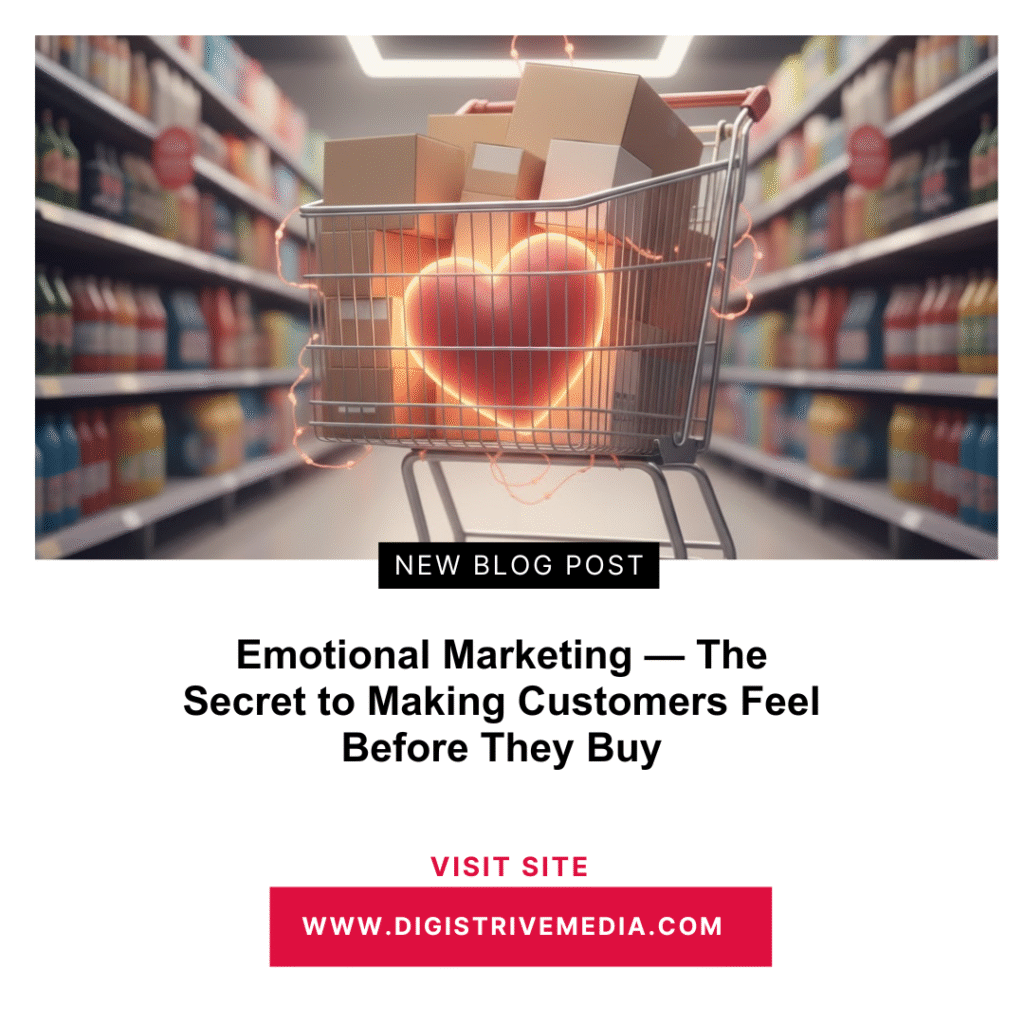
🎯 1. What Is Emotional Marketing?
Emotional marketing is the strategy of creating deep emotional connections with audiences to motivate action and loyalty.
It appeals to human feelings like joy, fear, trust, belonging, surprise, or inspiration, rather than focusing purely on features or price.
Instead of saying “Buy this product,” emotional marketing says,
“Here’s how this makes your life better.”
It’s storytelling powered by psychology, and when done right, it transforms customers into lifelong fans who trust, relate, and remember your brand.
💥 2. Why Emotion Beats Logic Every Time
The human brain makes decisions using two systems:
| System | Type | Function |
|---|---|---|
| System 1 | Emotional, Fast, Intuitive | Makes quick, instinctive choices |
| System 2 | Logical, Slow, Analytical | Processes rational decisions |
Most marketers try to persuade System 2 with facts and features, but real buying decisions happen in System 1 — emotional, automatic, and impulsive.
As behavioral scientist Gerald Zaltman said:
“People buy emotionally and justify logically.”
That’s why emotional ads outperform rational ones by 2–3 times in engagement, conversions, and brand recall.
💓 3. The 6 Core Emotions That Sell
Every viral campaign triggers one or more of these six powerful emotions that influence behavior:
| Emotion | Why It Works | Example |
|---|---|---|
| Happiness | Builds trust & positivity | Coca-Cola’s “Open Happiness” |
| Fear | Creates urgency & drives action | Cybersecurity & insurance ads |
| Surprise | Enhances memorability | Apple’s product reveal events |
| Anger | Sparks action & discussion | Social activism campaigns |
| Sadness | Builds empathy & emotional depth | Charity storytelling videos |
| Belonging | Creates a sense of identity | Nike’s “Just Do It” |
👉 Pro Tip: Choose an emotion that aligns naturally with your brand’s purpose — authenticity matters more than intensity.
🧩 4. Storytelling: The Heart of Emotional Marketing
Stories are how humans feel, remember, and act.
When you tell a brand story, your audience’s brain experiences it as if it’s happening to them.
Use this 4-part storytelling framework to craft emotional brand stories:
| Element | Description |
|---|---|
| The Hero (Customer) | The person with a goal or struggle |
| The Challenge | Their main pain point or fear |
| The Guide (Your Brand) | Who provides the solution or transformation |
| The Transformation | The “after” state — how their life improves |
Example:
Apple doesn’t sell technology — it sells creativity and empowerment.
“Think Different” wasn’t about computers; it was about identity and self-expression.
🎨 5. Visual & Color Psychology: Feelings Without Words
Before people read your message, they feel it — through visuals, color, and design.
| Color | Emotion Evoked | Ideal Use |
|---|---|---|
| Red | Passion, urgency | Flash sales, CTAs |
| Blue | Trust, calm | Finance, tech, healthcare |
| Yellow | Optimism, warmth | Youth & lifestyle brands |
| Black | Power, elegance | Luxury products |
| Green | Growth, peace | Sustainability & wellness |
Bonus Tip: Use authentic human faces in your visuals. Facial expressions trigger instant emotional empathy and trust.
💬 6. Words That Trigger Emotion
Your words shape emotion as much as visuals do.
Use language that paints feelings, not features.
Instead of saying:
❌ “Our app helps you manage time.”
Say:
✅ “Take back your mornings and feel in control again.”
Emotional Power Words to Use in Copywriting:
- Secret
- Unforgettable
- Transform
- Breakthrough
- Heartfelt
- Inspired
- Fearless
- Discover
These words activate emotional centers in the brain and turn passive readers into engaged customers.
🤝 7. Building Emotional Trust — The Invisible Currency
Trust is the foundation of emotional marketing.
It’s not claimed — it’s earned through empathy, transparency, and consistency.
How to Build Emotional Trust:
✅ Share behind-the-scenes content
✅ Use genuine customer testimonials
✅ Admit mistakes — authenticity builds respect
✅ Keep promises and deliver consistent value
When customers trust you emotionally, they stop comparing prices — they start believing in your brand.
⚙️ 8. Emotional Marketing in Action — Real Brand Examples
| Brand | Campaign | Emotion Used | Impact |
|---|---|---|---|
| Dove | “Real Beauty” | Belonging + Empowerment | Promoted confidence & body positivity |
| Airbnb | “Belong Anywhere” | Community | Strengthened emotional connection to travel |
| “Year in Search” | Inspiration + Empathy | Showed humanity through real stories |
Each of these brands uses emotion not to sell a product — but to create memories that keep audiences coming back.
📈 9. How to Use Emotional Marketing Across Platforms
| Platform | How to Apply Emotion |
|---|---|
| Social Media | Create story-driven reels and emotion-based captions |
| Email Marketing | Use personal tone, gratitude, and curiosity |
| Ads | Lead with storytelling visuals and value-driven copy |
| Blogs | Add relatable stories and empathy-driven insights |
| Video Marketing | Combine visuals, voice tone, and music to amplify feelings |
Keep one dominant emotion per campaign — consistency strengthens brand recognition and recall.
🚀 10. Measuring Emotional Impact
Emotions can be measured through engagement and behavioral data.
Here’s how to track your campaign’s emotional effectiveness:
✅ Engagement metrics — likes, shares, comments
✅ Sentiment analysis — identify audience tone
✅ Time on page — gauge connection strength
✅ User-generated content — measure trust and resonance
Emotions aren’t abstract — they’re data signals of trust, connection, and brand loyalty.
✅ Conclusion: Marketing That Feels Human Always Wins
In the end, marketing isn’t just about metrics or algorithms — it’s about empathy and emotion.
The most successful brands are those that:
- Make people feel something
- Tell stories that resonate
- Stay emotionally consistent across platforms
As automation and AI rise, emotional intelligence becomes your most powerful marketing skill.
Because in a digital world full of noise, feelings cut through.
💬 “People may forget your product, but they’ll never forget your impact.”
❓ Frequently Asked Questions (FAQs)
1. What is emotional marketing?
Emotional marketing is a strategy that connects with audiences through feelings rather than logic, influencing subconscious buying behavior.
2. Why are emotions important in marketing?
Emotions drive 95% of purchase decisions. They make customers feel connected, valued, and loyal.
3. How do you create emotional marketing content?
Use storytelling, color psychology, emotional words, and authentic brand messaging to evoke feelings and trust.
4. What are examples of emotional marketing?
Campaigns like Dove’s “Real Beauty” and Google’s “Year in Search” connect emotionally rather than promoting features.
5. Which emotions are most effective in marketing?
Happiness, fear, belonging, and inspiration are the most influential emotions for engagement and conversion.
6. How can I measure emotional marketing success?
Track engagement, sentiment, repeat visits, and user-generated content to gauge emotional resonance.
External Source:
For deeper insights on the science of emotional branding, explore Harvard Business Review’s guide on emotional connection in marketing.