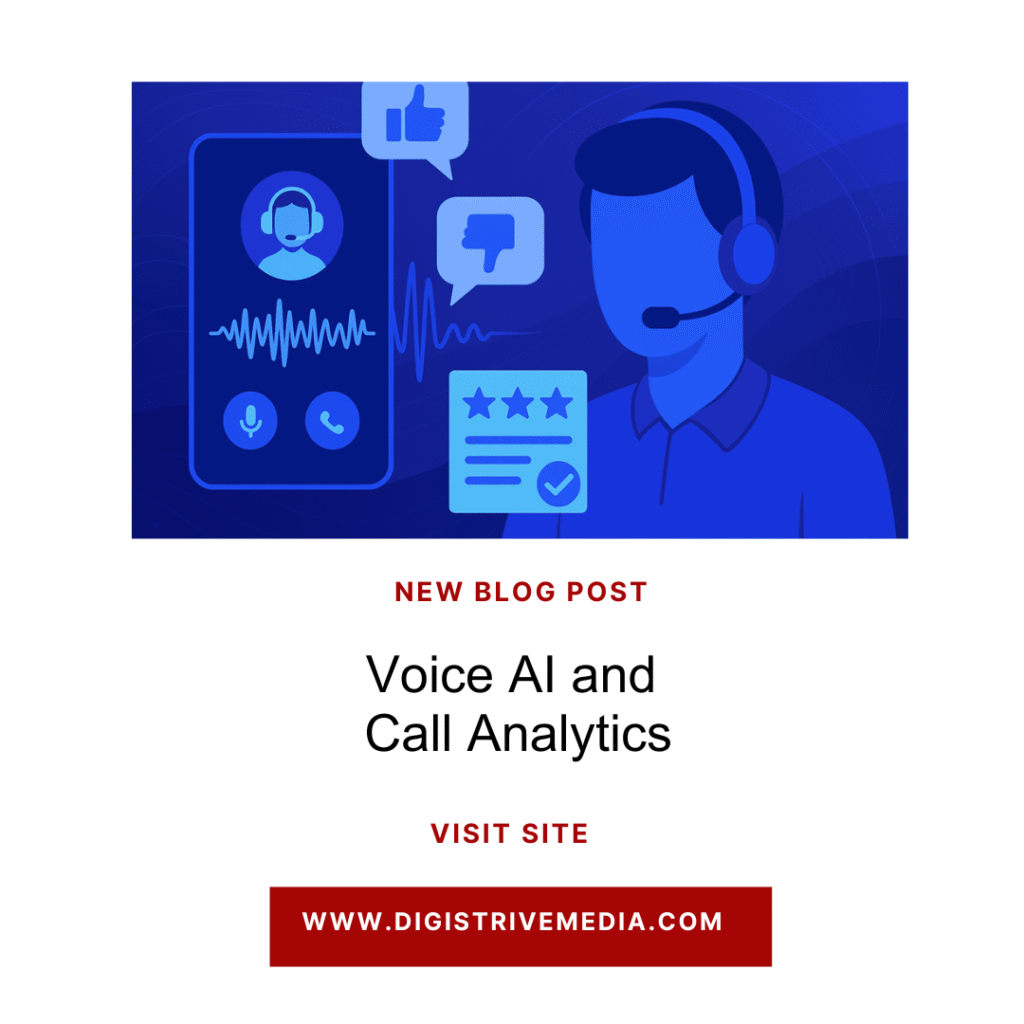
Voice AI and Call Analytics: Transforming Customer Conversations into Business Intelligence
In an age where customer experience defines brand success, businesses can no longer afford to treat phone calls as one-off interactions. Every conversation holds valuable data — insights into customer needs, emotions, and intent. Thanks to Voice AI and Call Analytics, companies can now tap into that data, turning ordinary calls into powerful sources of business intelligence.
These technologies are revolutionizing how organizations handle customer service, sales, and support by combining artificial intelligence with advanced speech and sentiment analysis. Let’s explore how Voice AI and Call Analytics are transforming the modern business landscape — and how you can leverage them to gain a competitive edge.
What Is Voice AI?
Voice AI (Voice Artificial Intelligence) refers to the use of artificial intelligence technologies that can understand, process, and respond to human speech. Unlike basic voice recognition systems, modern Voice AI goes a step further — it interprets context, emotion, tone, and intent.
You’ve already experienced Voice AI in action through assistants like Siri, Alexa, and Google Assistant, but in the business world, it’s being used in much more sophisticated ways — from AI-powered call centers to voice analytics platforms that analyze thousands of hours of recorded conversations.
Voice AI relies on technologies such as:
- Automatic Speech Recognition (ASR) – Converts spoken words into text.
- Natural Language Processing (NLP) – Understands meaning, context, and sentiment.
- Machine Learning (ML) – Learns from patterns and improves over time.
What Is Call Analytics?
Call Analytics is the process of recording, transcribing, and analyzing phone conversations to extract actionable insights. It helps businesses understand:
- What customers are saying
- How agents are responding
- Which keywords or phrases drive conversions
- How customer sentiment shifts throughout the call
When combined with Voice AI, call analytics becomes even more powerful — transforming unstructured voice data into valuable intelligence that can enhance marketing, sales, and customer service strategies.
How Voice AI and Call Analytics Work Together
When a customer calls your business, Voice AI automatically listens, transcribes, and analyzes the conversation in real time. It detects patterns like:
- The caller’s tone of voice or level of frustration
- The intent behind the inquiry (e.g., product interest, complaint, information request)
- The agent’s performance and response quality
AI then provides instant feedback or post-call summaries highlighting what went well and where improvements are needed. Over time, these systems learn to recognize what successful calls look like — helping businesses train teams and improve customer interactions continuously.
Key Benefits of Voice AI and Call Analytics
1. Enhanced Customer Understanding
Voice AI provides a deeper understanding of customer needs, emotions, and pain points. Instead of relying on surveys or feedback forms, businesses gain authentic insights directly from real conversations — the most genuine form of customer expression.
2. Improved Agent Performance
AI analytics can automatically evaluate agent performance based on metrics like response time, tone, empathy, and compliance. It offers targeted feedback and training recommendations, helping teams improve efficiency and customer satisfaction.
3. Real-Time Coaching and Support
Voice AI tools can analyze ongoing calls and send real-time prompts to agents — suggesting next steps, reminders about compliance, or offering up-selling tips. This on-the-spot support can dramatically improve conversion rates and first-call resolutions.
4. Accurate Lead Qualification
For sales teams, Voice AI acts as a digital assistant that listens for keywords or emotional cues indicating interest or intent to purchase. It automatically qualifies leads, saving valuable time and ensuring no potential customer is overlooked.
5. Data-Driven Decision Making
Call analytics aggregates thousands of conversations into structured data dashboards, showing trends in customer behavior, satisfaction, and intent. These insights help decision-makers refine marketing strategies, improve service processes, and forecast demand more accurately.
Real-World Applications
Voice AI and Call Analytics are already reshaping multiple industries:
- Customer Service Centers: Automating call summaries, identifying common complaints, and improving satisfaction scores.
- Sales Organizations: Detecting buyer intent, analyzing sales pitches, and boosting close rates.
- Healthcare: Streamlining patient intake and appointment scheduling while maintaining compliance.
- Finance: Enhancing fraud detection by analyzing voice patterns and emotional cues during transactions.
- E-commerce: Using post-call data to refine customer journeys and improve product recommendations.
Challenges and Ethical Considerations
While Voice AI offers immense potential, it also comes with challenges that must be managed carefully:
- Data Privacy: Recording and analyzing voice data requires strict compliance with privacy laws like GDPR and CCPA.
- Bias in AI Models: AI must be trained on diverse datasets to avoid misinterpretations or unfair evaluations.
- Human Oversight: AI should enhance, not replace, human judgment — especially in sensitive customer interactions.
Ethical deployment of Voice AI means maintaining transparency, gaining consent, and using data responsibly.
The Future of Voice AI and Call Analytics
The next wave of Voice AI innovation will go beyond call centers. Businesses are beginning to use voice data for predictive analytics — forecasting customer churn, identifying new opportunities, and even detecting emotional burnout in employees.
As large language models (like GPT-based systems) become more advanced, we’ll see AI capable of generating context-aware responses, simulating empathy, and integrating seamlessly with CRMs and marketing platforms. This evolution will make every customer call a valuable learning opportunity, fueling continuous growth and innovation.