Running a small business today is more challenging than ever. Business owners often manage multiple responsibilities at the same time, including sales, marketing, customer support, inventory management, accounting, and team coordination. As businesses grow, these daily tasks become more complex and time-consuming. Because of this, many entrepreneurs struggle to maintain efficiency while also focusing on long-term growth. This is where Small Business Automation Tools become essential.
Small business automation tools help companies streamline repetitive tasks, reduce manual effort, and improve productivity. Instead of spending hours on routine operations, business owners can automate processes and focus on strategic decision-making. Moreover, automation minimizes human error, improves consistency, and enhances customer experience. Whether it is sending automated emails, managing customer data, scheduling social media posts, or generating reports, automation makes business operations smoother and more efficient.
In today’s competitive market, businesses that adapt quickly often gain a significant advantage. Therefore, adopting automation is no longer a luxury; it has become a necessity. From startups to established enterprises, many organizations now rely on automation to save time, cut costs, and increase profitability. In this blog, we will explore how Small Business Automation Tools are transforming modern businesses and why every growing business should consider implementing them.
Why Small Businesses Need Automation More Than Ever
Small businesses often operate with limited resources. Unlike large corporations, they may not have dedicated departments for every function. As a result, employees frequently handle multiple responsibilities, which can reduce efficiency and increase stress. Manual processes consume valuable time and often create bottlenecks in operations.
Automation solves these challenges by handling repetitive tasks without constant human intervention. For example, invoicing software can automatically generate and send bills to clients. Similarly, CRM systems can track customer interactions and follow-ups without manual updates. This reduces workload and improves workflow.
Additionally, automation helps business owners make faster decisions through real-time analytics and reporting. Instead of collecting data manually, automated tools provide instant insights into sales performance, customer behavior, and operational efficiency. Consequently, businesses can respond quickly to changing market conditions.
How Automation Improves Daily Business Operations
Every business has tasks that repeat daily, weekly, or monthly. These repetitive activities may seem small individually, but together they consume substantial time. Tasks such as appointment scheduling, email responses, payroll processing, and lead management often take hours.
By implementing Small Business Automation Tools, businesses can reduce this burden significantly. Automated workflows ensure tasks happen consistently without delays. For instance, customer inquiries can trigger automatic responses, reducing wait time and improving satisfaction.
Furthermore, automation allows team members to focus on high-value tasks. Employees can spend more time solving problems, building relationships, and creating strategies instead of performing repetitive administrative work. This improves productivity across the organization.
Customer Relationship Management Tools
Managing customer relationships is crucial for any business. However, tracking every customer interaction manually becomes difficult as the customer base grows. This is why CRM automation tools have become highly valuable.
CRM platforms store customer details, communication history, and purchase behavior in one place. More importantly, they automate follow-ups, reminders, and sales tracking. This helps sales teams nurture leads efficiently and improve conversion rates.
Businesses using CRM automation can personalize communication based on customer behavior. For example, customers who abandon shopping carts can receive automated reminders. This improves engagement and increases sales opportunities.
Popular CRM platforms such as Salesforce and HubSpot offer powerful automation features for businesses of all sizes.
Marketing Automation for Better Reach
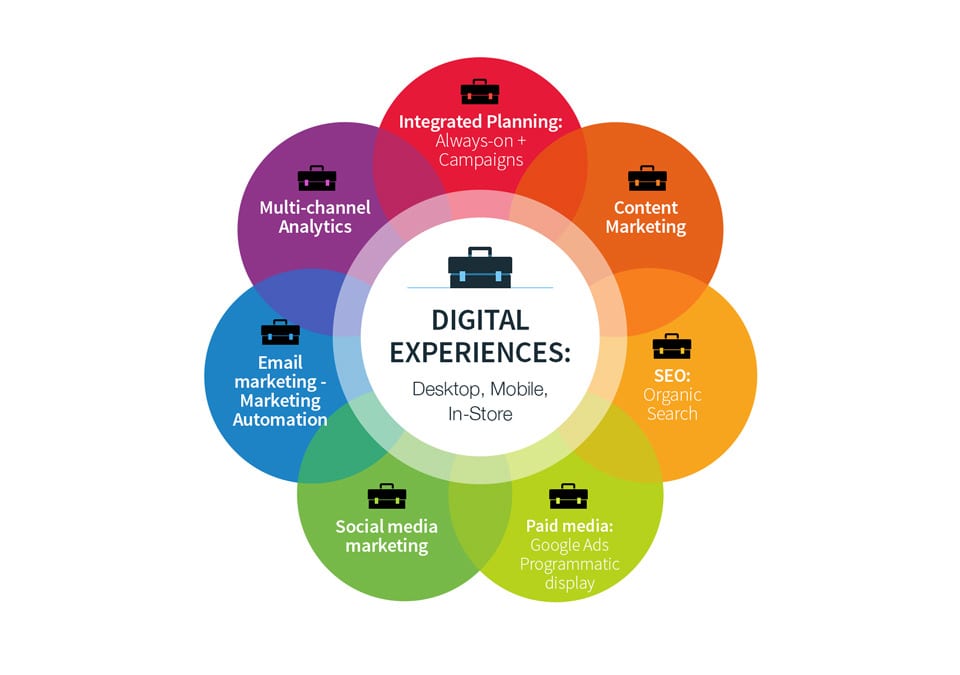
Marketing requires consistent effort across multiple channels. Businesses must manage email campaigns, social media, advertisements, and content marketing. Doing all this manually can become overwhelming.
Marketing automation simplifies these activities by scheduling and managing campaigns automatically. Email automation tools send personalized emails based on user actions. Social media tools schedule posts in advance and publish them at optimal times.
This ensures consistent brand presence. Additionally, automated campaigns help businesses nurture leads throughout the customer journey. A potential customer who downloads a guide can automatically enter an email sequence that educates and encourages purchase decisions.
Therefore, marketing automation improves efficiency while boosting lead generation and customer engagement.
Social Media Automation Tools
Social media has become an essential business growth channel. However, creating and posting content consistently requires planning and effort. Many small businesses struggle to maintain regular posting schedules.
Social media automation tools solve this challenge. These platforms allow businesses to schedule posts, monitor engagement, and analyze performance from one dashboard. This reduces manual effort and improves campaign consistency.
Businesses can plan weekly or monthly content calendars and automate publishing across platforms. As a result, they maintain visibility without constant manual intervention.
Tools like Buffer and Hootsuite help streamline social media management effectively.
Accounting and Financial Automation
Financial management is one of the most critical areas for business success. Accurate bookkeeping, expense tracking, payroll, and tax preparation are essential for maintaining healthy finances. However, manual financial processes increase the risk of errors.
Accounting automation tools simplify these processes significantly. They automatically categorize expenses, generate invoices, reconcile bank transactions, and prepare financial reports.
This improves financial accuracy and saves time. Additionally, business owners gain clear visibility into cash flow and profitability. Automated reminders for unpaid invoices also improve collections.
Popular accounting platforms such as QuickBooks help businesses manage finances efficiently.
Inventory and Order Management Automation
For businesses selling physical products, inventory management can be challenging. Overstocking increases storage costs, while stock shortages lead to lost sales and dissatisfied customers.
Inventory automation tools track stock levels in real time. When inventory reaches a specific threshold, the system can trigger purchase orders automatically. This ensures stock availability while minimizing waste.
Order processing also becomes faster through automation. Orders move seamlessly from purchase to packaging and shipping. Customers receive automatic order confirmations and delivery updates.
This improves operational efficiency and customer satisfaction simultaneously.
Workflow Automation Across Teams
Every department in a business depends on efficient communication. Poor coordination often causes delays, missed deadlines, and confusion. Workflow automation improves collaboration by connecting systems and processes.
Automation platforms can trigger tasks between departments automatically. For example, when sales closes a deal, the billing department receives instant notification. Likewise, project teams can receive automatic task assignments.
This reduces communication gaps and improves operational speed. Teams become more aligned, and processes become more predictable.
Platforms like Zapier connect thousands of apps and automate workflows seamlessly.
Email Automation and Customer Communication
Customer communication directly impacts business growth. Slow responses can frustrate potential buyers and reduce trust. Therefore, timely communication is essential.
Email automation ensures customers receive relevant information at the right time. Welcome emails, follow-up sequences, reminders, and promotional campaigns can all run automatically.
This strengthens customer relationships while reducing manual workload. Additionally, personalized communication increases engagement and conversion rates.
Businesses can segment audiences and deliver highly targeted messages for better results.
HR and Employee Management Automation
Managing employees involves recruitment, onboarding, attendance tracking, payroll, and performance monitoring. Manual HR processes can consume significant administrative time.
HR automation tools simplify these responsibilities. New employee onboarding can include automated document collection, training schedules, and reminders. Attendance systems can automatically track working hours.
Payroll processing becomes more accurate and faster. This reduces administrative stress and improves employee experience.
Consequently, business leaders can focus more on team development and culture building.
Data Analytics and Reporting Automation
Data plays a major role in business decision-making. However, collecting and analyzing data manually is slow and inefficient. Automated analytics tools transform raw data into actionable insights.
Businesses can monitor sales trends, marketing performance, and customer behavior through dashboards. These reports update automatically in real time.
This allows faster decision-making and better forecasting. Instead of reacting late, businesses can identify opportunities early.
Data-driven decisions often lead to improved profitability and stronger business growth.
Reducing Costs Through Automation
Cost control remains a priority for every small business. Labor-intensive processes often increase operational expenses. Repetitive manual work also creates inefficiencies that drain resources.
Automation reduces costs by improving efficiency and reducing errors. Businesses need fewer manual interventions for routine tasks. This saves time and lowers labor costs.
Moreover, automation reduces losses caused by mistakes, delays, or missed opportunities. Over time, these savings significantly improve profitability.
Therefore, investing in Small Business Automation Tools often delivers excellent long-term returns.
Choosing the Right Automation Tools
Not every automation tool fits every business. Choosing the right solution depends on business size, industry, goals, and budget. Before investing, businesses should identify repetitive tasks that consume the most time.
It is wise to start with tools that solve immediate operational challenges. Businesses should evaluate ease of use, scalability, integration capabilities, and support services.
Additionally, selecting user-friendly tools improves adoption among team members. A simple and practical automation solution often delivers faster results than complex systems.
The goal is not to automate everything at once but to automate strategically.
Future of Small Business Automation
Automation technology continues to evolve rapidly. Artificial intelligence, machine learning, and predictive analytics are making automation smarter than ever. Future systems will become even more intuitive and adaptive.
Businesses will increasingly use intelligent automation for customer support, personalization, forecasting, and decision-making. AI-powered chatbots, predictive inventory systems, and smart analytics are already changing business operations.
Small businesses that adopt automation early will remain more competitive. They will adapt faster, serve customers better, and scale efficiently.
The future clearly belongs to businesses that embrace digital transformation.
Conclusion
The business landscape is evolving quickly, and companies must adapt to survive and grow. Manual processes that once worked effectively now slow down operations and limit growth potential. This is why Small Business Automation Tools have become essential for modern businesses. They streamline operations, improve productivity, reduce costs, and enhance customer experiences.
From marketing and finance to HR and workflow management, automation creates measurable improvements across every business function. More importantly, it allows business owners to focus on innovation, strategy, and customer relationships instead of repetitive tasks. Businesses that embrace automation today position themselves for long-term success tomorrow.
Adopting automation does not require massive investment or complex systems. Even small changes can produce significant results. Therefore, now is the perfect time to explore automation and transform your business operations.
Visit: Digistrive Media
Contact: +91 8147327494 / +91 8050732515